

The Rituals of Hajj: Step-by-Step Guide
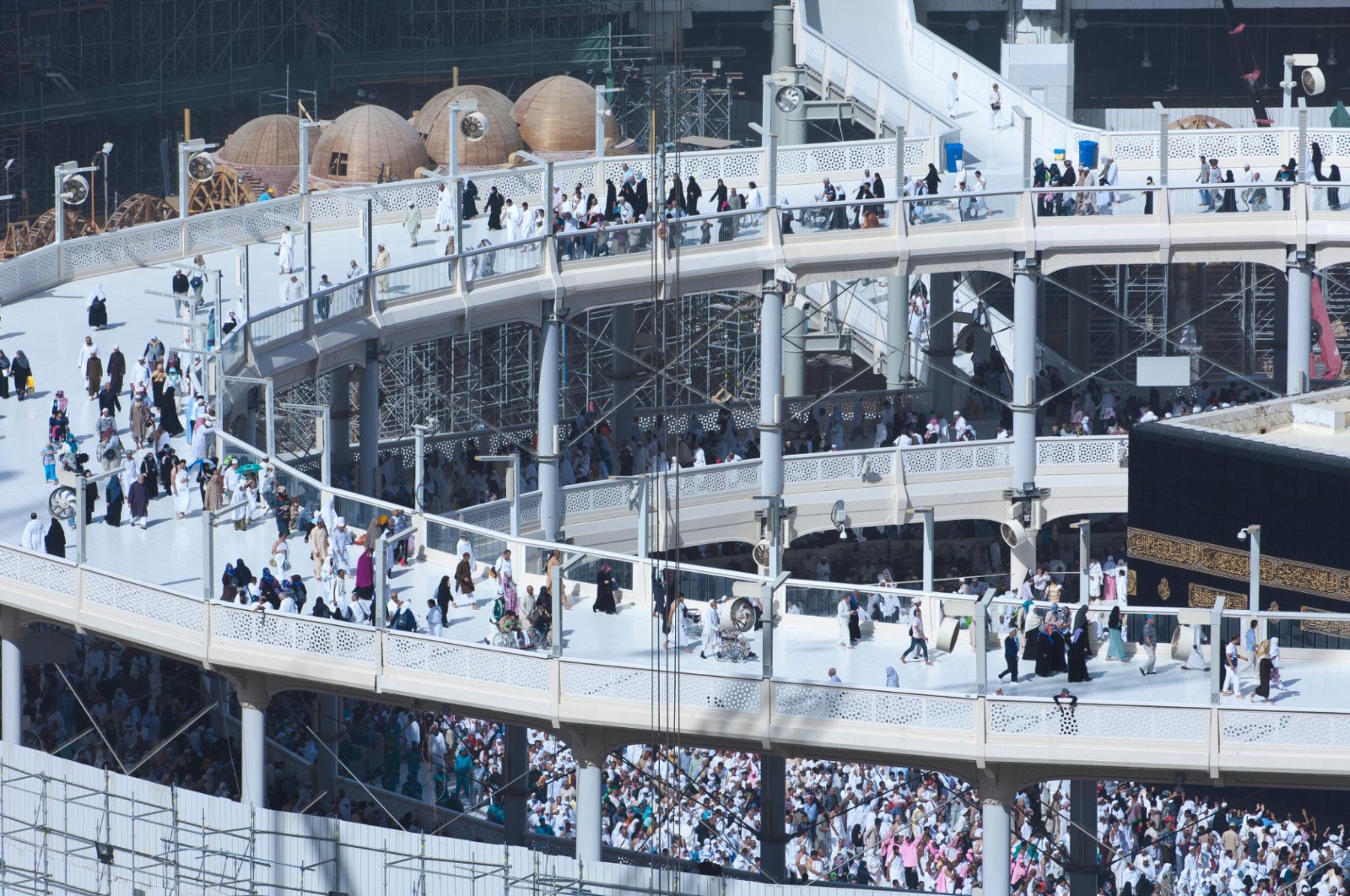
Billions of our Muslim brothers and sisters around the world have been undertaking Hajj each year since 629 CE, following the migration of Prophet Muhammad (SAW) from Medina to Makkah. For anyone preparing to go, it’s an incredibly exciting time, but of course a deeply spiritual, serious and important period of our lives. This handy Hajj guide will help you understand the different aspects of the holy pilgrimage.
SubhanAllah, every year around 25,000 Muslims from the USA travel to the holy cities of Makkah and Medina to perform Hajj, in unity with Muslims from all over the globe. So if you’re one of these next pilgrims heading off to Saudi Arabia to fulfil this sacred pillar, read on! We’ve put together this handy Hajj guide to help you through this blessed journey.
How to Perform Hajj
Before you arrive at Makkah to start Hajj, it’s important to make your intention (niyah) within your heart. The intention must be to perform the Hajj for the sake of Allah alone, with a desire for the Hereafter. It should not be done with the intention of being seen among others or for worldly gain.
Next, you’ll enter the state of ihram. Men are only allowed to wear two-piece white clothes; all other accessories are prohibited to them. Women can wear any type of clothes, but they should look modest and fully covered. Face coverings, however, are not permitted.
Fully covering shoes is also not permitted. Footwear must be sandals for both men and women. Many Islamic travel agencies, such as Bismillah Tours in the USA, are offering the 2026 Hajj package. These packages include accommodation, a tour guide, meals, and transportation.
Ihram is the spiritual state you enter once you have made the intention to go to Hajj. When over three million pilgrims descend into Makkah, there should not be any outward distinction between pilgrims.
Everyone stands equal in the eyes of Allah (SWT), whether you’re rich or poor and irrespective of ethnicity. Hence, the rules around the clothing of Ihram are extremely simple, yet strict and must be adhered to.
When you arrive in the sacred mosque, your holy journey of Hajj has started.
Hajj Step-by-Step: Intention
Before you arrive at Makkah to begin Hajj, it’s important to make your intention (niyyah) within your heart. The intention must be to perform the Hajj for the sake of Allah (SWT) alone. It should not be done with the intention of being seen by others or for worldly gain. Only for a desire for good in the Hereafter.
Wear Ihram
The rules around the clothing of Ihram are extremely simple, yet strict and must be adhered to.
For men, this means wearing the designated white cloth. One piece should be wrapped around your shoulder and one around your waist. Ladies may wear any clothing of their choice, but should ensure they observe the rules of Hijab. Face coverings, however, are not permitted. Fully covering shoes is also not permitted. Both women and men must wear sandals for footwear.
Tawaf
Tawaf is one of the principal rites of the pilgrimage. It refers to walking in circles around the Ka’bah in an anti-clockwise motion.
One Tawaf is made up of seven complete circuits. Each one starts and ends at the black stone, situated within the Ka’bah.
In addition to your Tawaf, you can also offer voluntary prayers. To thank Allah (SWT) for arriving safely and mark the start of this incredibly special spiritual journey.
Sai
After tawaf, you’ll begin sai (walking safa or Marwa). Men have to run to the green point, and women will just simply walk. This ritual is done in the beautiful memory of Hazrat Hajrah and Hazrat Ismail AS.
Mina
Muslims don’t stay in Makkah for all of Hajj’s obligatory rituals. Instead, pilgrims stay at Mina, a small town five to six kilometres from Makkah. There, pilgrims pray all five daily prayers, as well as non-compulsory prayers.
Although known as the City of Tents, rest assured that all the essential modern amenities you would hope for are there to use.
Mount Arafat
Pilgrims went to Mount Arafat on the second day of the Hajj. This day is considered the most sacred day in the Islamic calendar. Our Prophet PBUH delivered his last speech on this day. many muslims keep fast on this as it is a sunnah. Pilgrims continuously recite the talbiyah on this day.
They also perform a main part at this point, wuquf, which means they stand on their feet in front of the Almighty till sunset. There, they pray, repent and listen to soul-enriching sermons.
Muzdalifah
The journey did not end at Mount Arafat; pilgrims went to Mina in their tents and took a short layoff at Muzdalifah to collect pebbles. At this point, they offer Maghrib and Isha prayer together at Muzdalifah and sleep under the open sky the whole night.
Rami al Jamarat and Qurbani
The third day of Hajj (Qurbani/ Udhiya Day) starts with prayers at Muzdalifa before pilgrims make their way back to Mina. Back at Mina, pilgrims perform Rami al-Jamarat, also known as the ‘stoning of the devil’. This involves throwing seven stones at Jamraat al-Aqabah, the largest of three pillars that represent the Devil.
This stoning ritual is one of the obligatory acts of Hajj. It commemorates the time in which the Devil attempted to make the Prophet Ibrahim (AS) turn his back to Allah (SWT), to which Ibrahim threw pebbles at him.
This continues from noon to sunset for the next two days. However, on the latter two days, pilgrims throw seven pebbles at all three of the pillars.
After this, pilgrims sacrifice animals on the 10th of Dhul Hijjah in the remembrance of Hazrat Ibrahim and Hazrat Ismail AS.
Conclusion
For those who have performed Hajj, the memories stay forever with them. For those who haven’t yet performed, they wish to perform Hajj.
It is not just a journey; it is a life-changing point in every pilgrim’s life. The impact of Hajj lasts on the pilgrim’s life. Every step of Hajj gets us closer to our Creator, and we can see the impact of Hajj in every life in every step.
